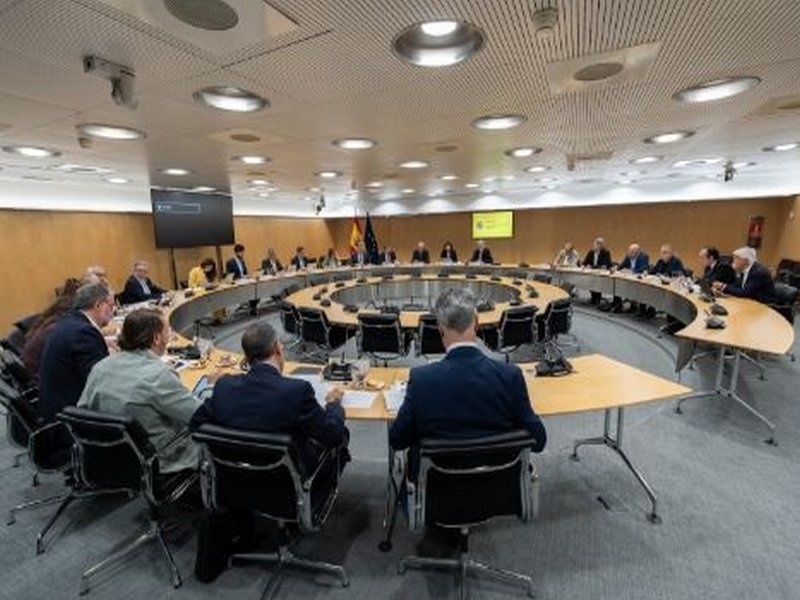
Representatives from ANFFE, ACEFER, AEFA, ACCOE, CESFAC, FIAB, UGT, and CCOO participated yesterday in a meeting convened by the First Vice President and Minister of Economy, Trade and Business, Carlos Cuerpo, and the Minister of Agriculture, Fisheries and Food, Luis Planas, to analyze the situation of the agri-food sector in light of the consequences of the Middle East crisis.
The participating organizations emphasized the fundamental role of fertilizers in maintaining crop yields and agricultural production, as well as the importance of continuing to support the sector given the current situation. Against this backdrop, various alternatives for mitigating the impact of fertilizer costs were proposed during the meeting; these included fiscal measures—such as reducing the VAT on fertilizers—the possibility of using revenue generated by the CBAM to bolster the agricultural sector's competitiveness, and the need to consider new support measures for fertilization ahead of the upcoming season.
ANFFE President Ignacio García focused his remarks on the current market situation. The combination of subdued agricultural commodity prices and potential increases in fertilizer costs is creating significant uncertainty regarding the profitability of the upcoming season, causing purchasing and procurement decisions to be delayed due to fears of accumulating inventory at high prices.
García highlighted that fertilizer consumption has dropped by nearly 30%, a trend that could impact fertilization practices, crop yields, and agricultural output. This stagnation also complicates planning for manufacturers and may lead to a concentration of purchases at the start of the season, creating temporary strain on transport and, in particular, on restocking capacity.
The president of ANFFE welcomed the aid measures implemented in 2026 but noted that, should the situation persist, continued support for farmers in 2027 would be necessary through simple, effective mechanisms that provide certainty and foster proper fertilization. In this regard, he proposed considering aid linked to the actual purchase of fertilizers, ensuring that the support corresponds to the quantities acquired and actual fertilization expenditure, rather than being calculated solely based on cultivated hectares.
Finally, ANFFE Vice President Javier González Paloma noted that the sector had previously warned of the risk of temporary production facility shutdowns—a possibility that is now beginning to materialize. He cited the recent halt at the Fertiberia plant in Palos de la Frontera (Huelva)—which produces ammonia, urea, and AdBlue—as an example. This situation also reduces CO2 availability for other sectors, including the beer and soft drink industries, highlighting how the fertilizer industry's difficulties can have a ripple effect on other supply chains.
MEETING CONCLUSIONS
The Government indicated that the aid planned for 2026 has already been implemented and that potential measures for 2027 would need to be developed in collaboration with the sector. It also highlighted the technical and administrative challenges involved in structuring—in this instance—direct aid to farmers linked to fertilizer purchases.
ANFFE welcomes the continued dialogue and considers it a priority to begin work on measures for 2027 as soon as possible, with the aim of ensuring adequate crop fertilization and preserving the productive capacity and competitiveness of the Spanish fertilizer industry.